Rules
Canada Periodical Fund Eligibility: A Practical Guide for Magazines
Canada Periodical Fund eligibility depends on ownership, circulation and Canadian content. This guide covers Canadian Heritage rules and records to keep.
What to take away
- The Canada Periodical Fund sets binding eligibility rules for Canadian magazines.
- A compliant application must show Canadian ownership, paid circulation and a defined share of Canadian editorial content.
- Keep issue copies, circulation reports, ownership records and revenue ledgers for five years after the claim period.
- Misreporting can trigger repayment of funding and disqualification from future rounds.
Who has jurisdiction
Canadian Heritage administers the Canada Periodical Fund. The official page sets out current eligibility criteria, application deadlines and required forms. The Fund has two streams: Aid to Publishers and Business Innovation. It applies to paid-circulation magazines and non-daily newspapers that are published in Canada.
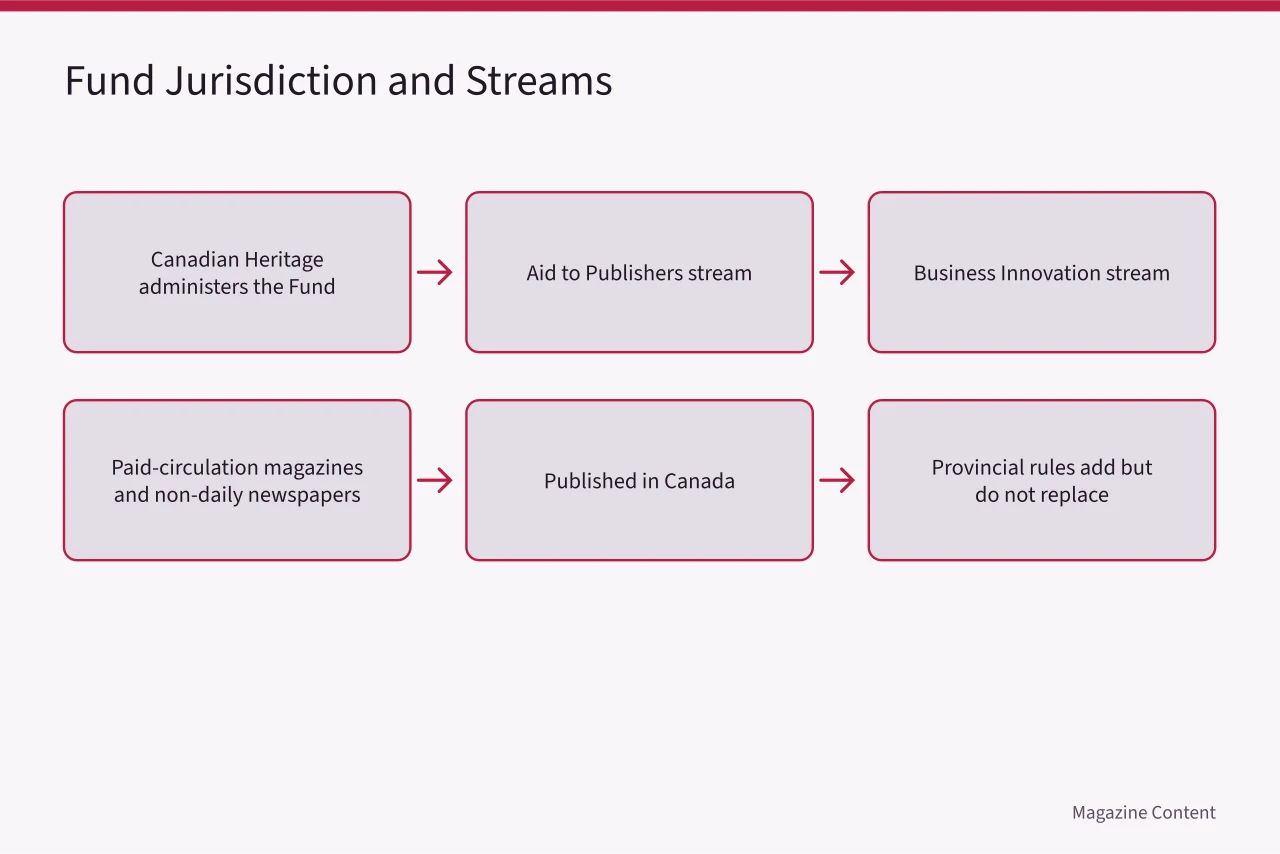
The regulator is the Department of Canadian Heritage. Provincial bodies may add their own cultural funding rules, but they do not replace Fund eligibility. You must meet the federal standard first. The Department of Canadian Heritage Act gives the Minister authority over the program guide.
What a compliant disclosure contains
A compliant disclosure is more than a signed form. It names the owner, the editor and the circulation auditor. It states the share of Canadian editorial content and paid circulation by source. The application must match the records you keep.
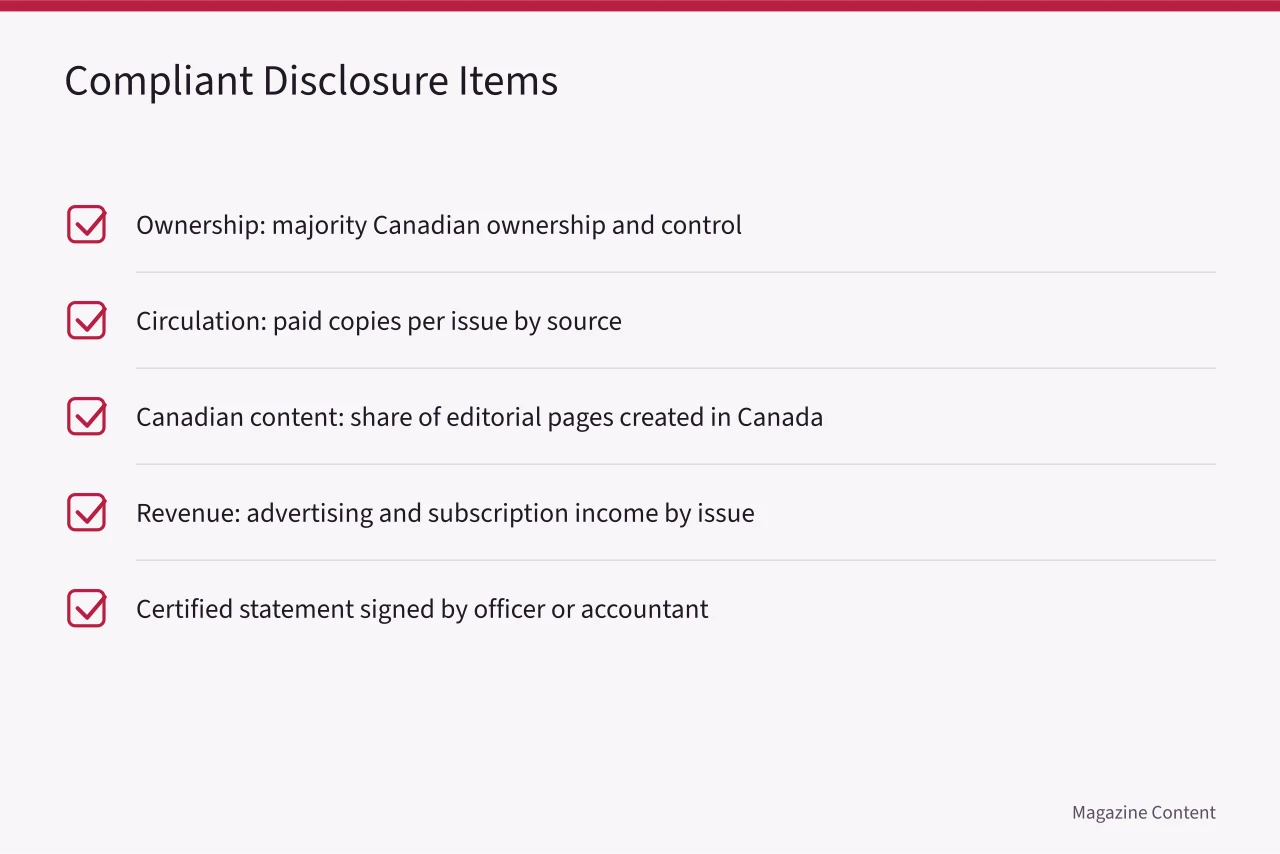
Each application must include certified statements about ownership, circulation and Canadian content. A certified statement is signed by an officer of the publishing company or by a professional accountant. It carries the same weight as a tax filing. The Canada Periodical Fund also supports business innovation projects, but the core eligibility rules are unchanged.
The table below lists the disclosure items every magazine must address.
| Disclosure item | What it must show | Common record |
|---|---|---|
| Ownership | Majority Canadian ownership and control | Shareholder register |
| Circulation | Paid copies per issue, split by source | Auditor's report |
| Canadian content | A defined share of editorial pages created in Canada | Issue PDFs |
| Revenue | Advertising and subscription income by issue | Financial statements |
Canadian Heritage checks these disclosures against your audited circulation statements. If you use a professional auditor, the auditor's report becomes part of the disclosure.
Records to keep
Keep the following records for at least five years after the end of the claim period:
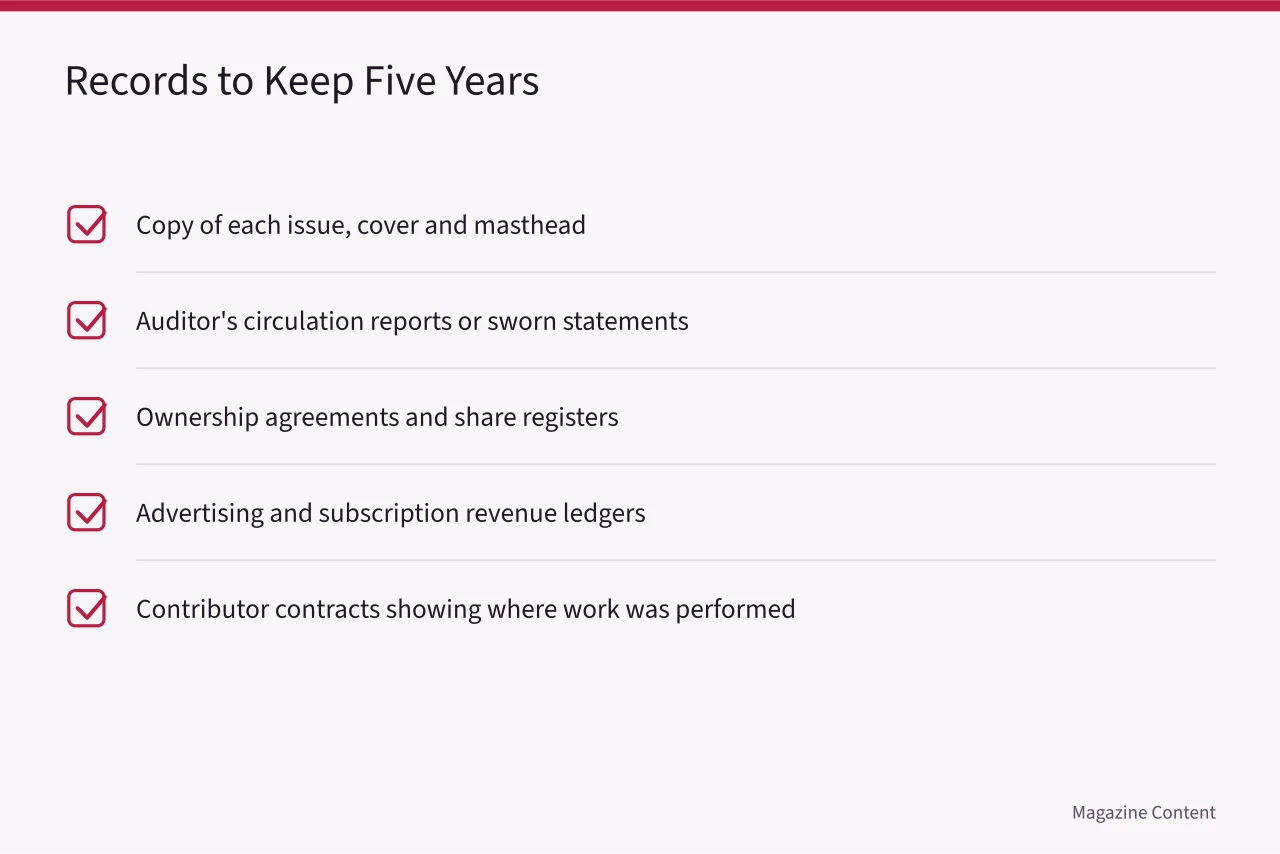
- A copy of each issue published during the claim period, including the cover and masthead.
- Auditor's circulation reports or sworn publisher statements.
- Ownership agreements, share registers and any unanimous shareholder agreement.
- Advertising and subscription revenue ledgers.
- Contributor contracts that show where editorial work was performed.
These records must be available if Canadian Heritage asks for an audit. The Fund may also ask for proof of mailing or distribution. Retention starts after the final payment for that funding year. If you switch auditors, keep all previous audit trails. Keep your magazine media kit consistent with the circulation data you submit to the Fund. See Magazine Media Kit Examples for what to include when you sell ad space.
What happens if you do not
An audit can start years after the claim year. Canadian Heritage may ask for circulation statements, bank deposit records and newsstand sell-through reports. Missing records at that late stage may force you to repay money already spent. Keep a separate folder for each funding year. Do not rely on memory. This rule applies even if the error was made by a contractor. Publishers without a clean audit trail face longer review times.
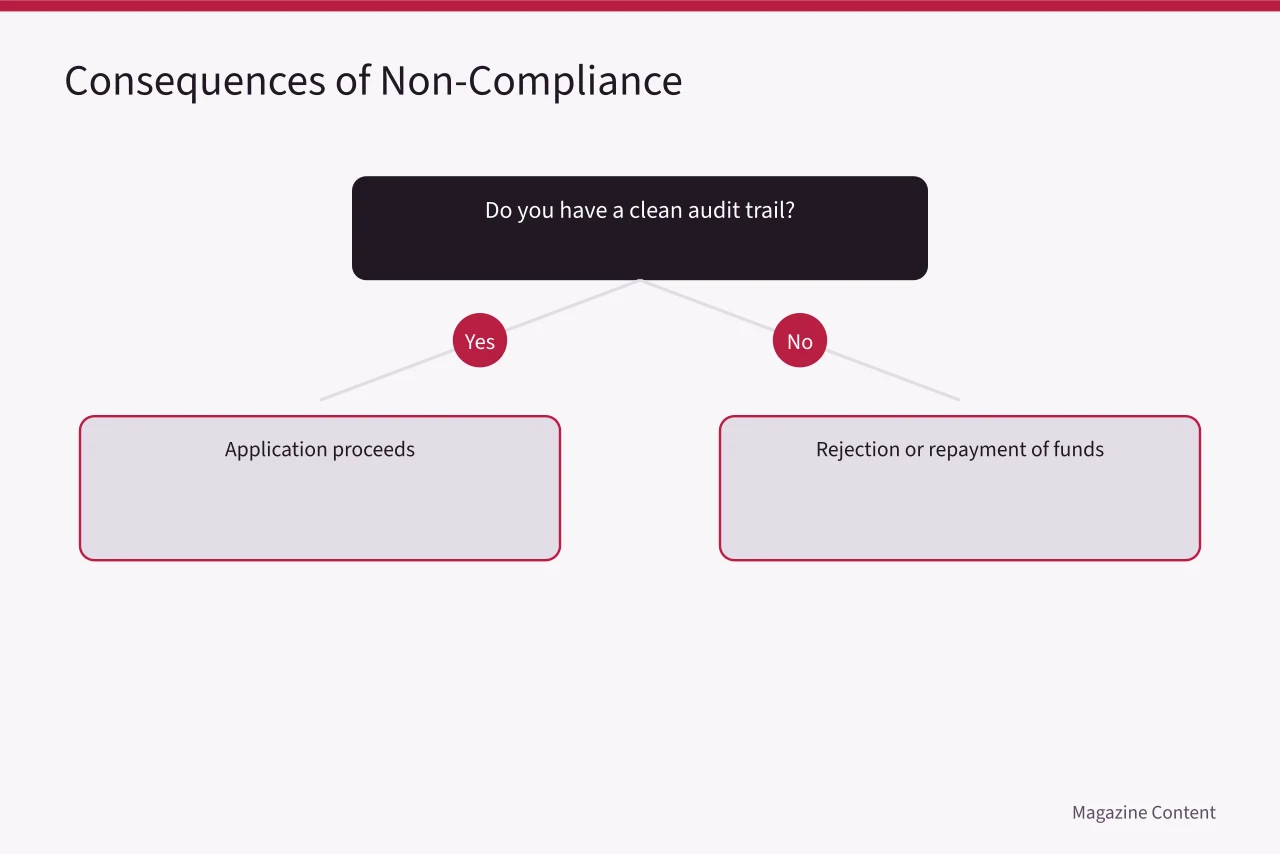
If you fail to keep records, Canadian Heritage may reject your application. If you misstate circulation or Canadian content, the Fund can require repayment of the full amount already advanced. You may also be disqualified from the next two funding rounds. That is a concrete consequence editors should not ignore.
A false claim is treated seriously. Canadian Heritage may refer a suspicious file to the Canada Revenue Agency or to a forensic auditor. The Fund also shares information with provincial funders. A publisher who is disqualified cannot apply through a related company. The case study on a fictional magazine data claim shows how circulation numbers get tested against source records. The same audit logic applies to Fund applications.
Where the rules differ by place
The Canada Periodical Fund applies across all provinces and territories. Quebec has its own Société de développement des entreprises culturelles reporting for provincial top-ups. Those provincial rules add requirements, but they do not change the federal thresholds. Magazines that serve official-language minority communities may have different circulation thresholds. In Quebec, the provincial agency also asks for cultural content reporting. Atlantic provinces have no additional magazine funding body, so only federal rules apply.
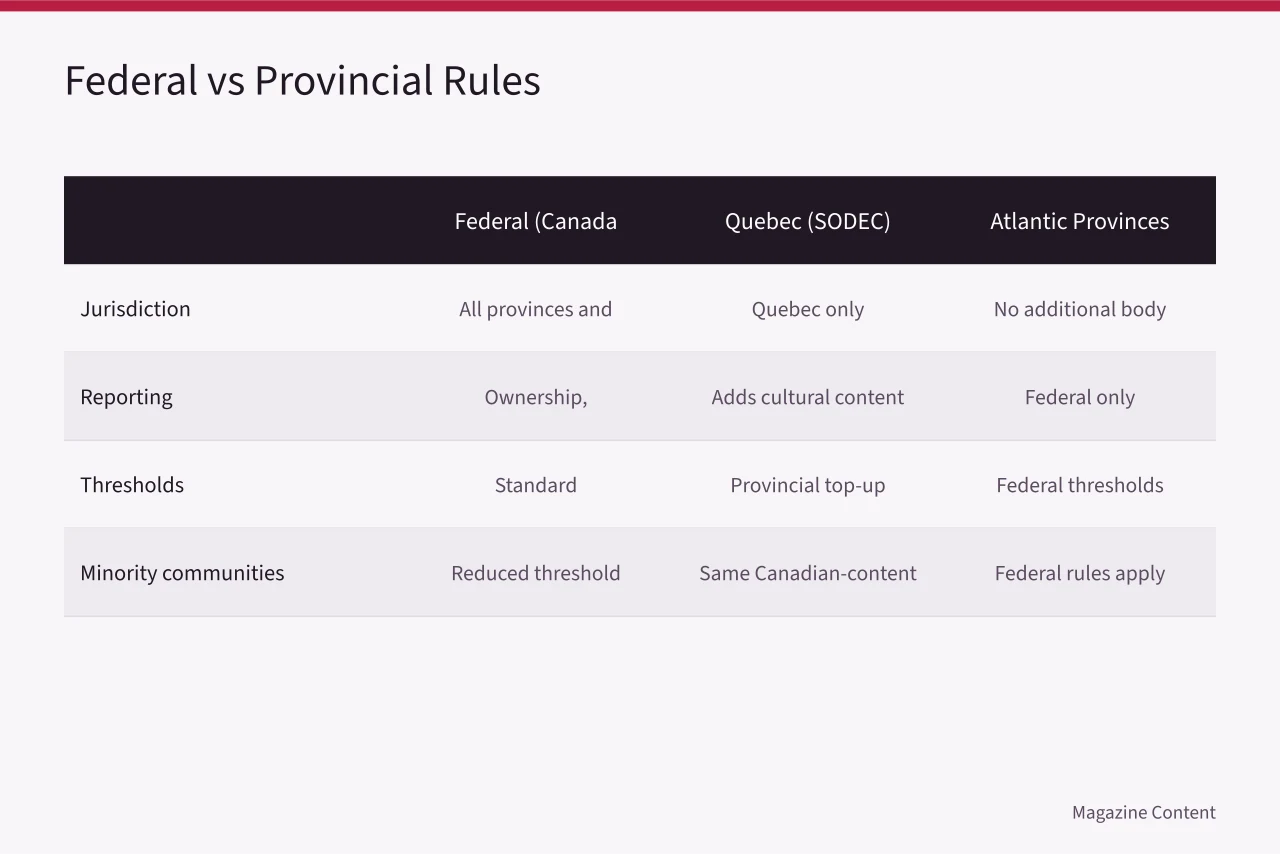
A magazine editorial style guide should record how you define Canadian content for each issue. That definition matters when a Quebec auditor reviews both federal and provincial claims.
Official-language minority community magazines may use a reduced paid-circulation threshold. The Fund publishes those thresholds in its annual guidelines. A magazine that serves Francophone readers outside Quebec must still meet the same Canadian-content share. Editors should read the definitions of 'Canadian editorial content' in the program guide.
The definition includes material written or translated by Canadian citizens or permanent residents. It excludes syndicated content unless a Canadian editor has made a substantive change. Keep a note in your production file when you rely on that exception.
In the territories, few magazines meet the paid-circulation floor on their own. Some titles share a distribution network or use a paid-circulation audit across two editions. The Fund does not adjust the threshold for geography, so those publishers often pair with a provincial partner.
Design and layout do not affect eligibility. But you still need a working production system. See magazine design, layout, and typography for a practical guide.
Common questions
Do I need a minimum number of paid subscribers to qualify? Yes. Paid magazines must meet a minimum paid circulation per issue. The threshold is lower for magazines serving official-language minority communities.
Can a digital-only magazine apply? No. The Canada Periodical Fund requires a print edition with paid circulation. Digital editions alone do not qualify.
How long should I keep circulation records? Five years after the final claim period. Some provinces ask for seven years.
What happens if I miss the application deadline? You must wait for the next cycle. Late applications are not accepted.