Guides
How to Create a Magazine Editorial Style Guide
A magazine editorial style guide grows in stages, from a one-page ruling sheet to a full house book. Here is the order of work and where it stalls.
What to take away
- Start with a one-page ruling sheet, not a book. It takes 2 to 3 weeks and covers the 20 decisions your desk argues about most.
- Pick one base authority, AP or Chicago, and write down every deviation. Mixing them silently is the failure mode.
- The first real blocker is a named owner. A guide with no keeper goes stale within a quarter.
- Spelling, numerals, titles, and dates cause most copy desk disputes. Rule on those before you touch typography.
- A style guide is a living document. Schedule a review every 6 months and log every ruling as you make it.
Why a one-page ruling sheet comes first
Most magazines try to write the full book on day one. That draft sits in a shared drive for months because nobody can agree on serial commas long enough to finish the section on capitalization.
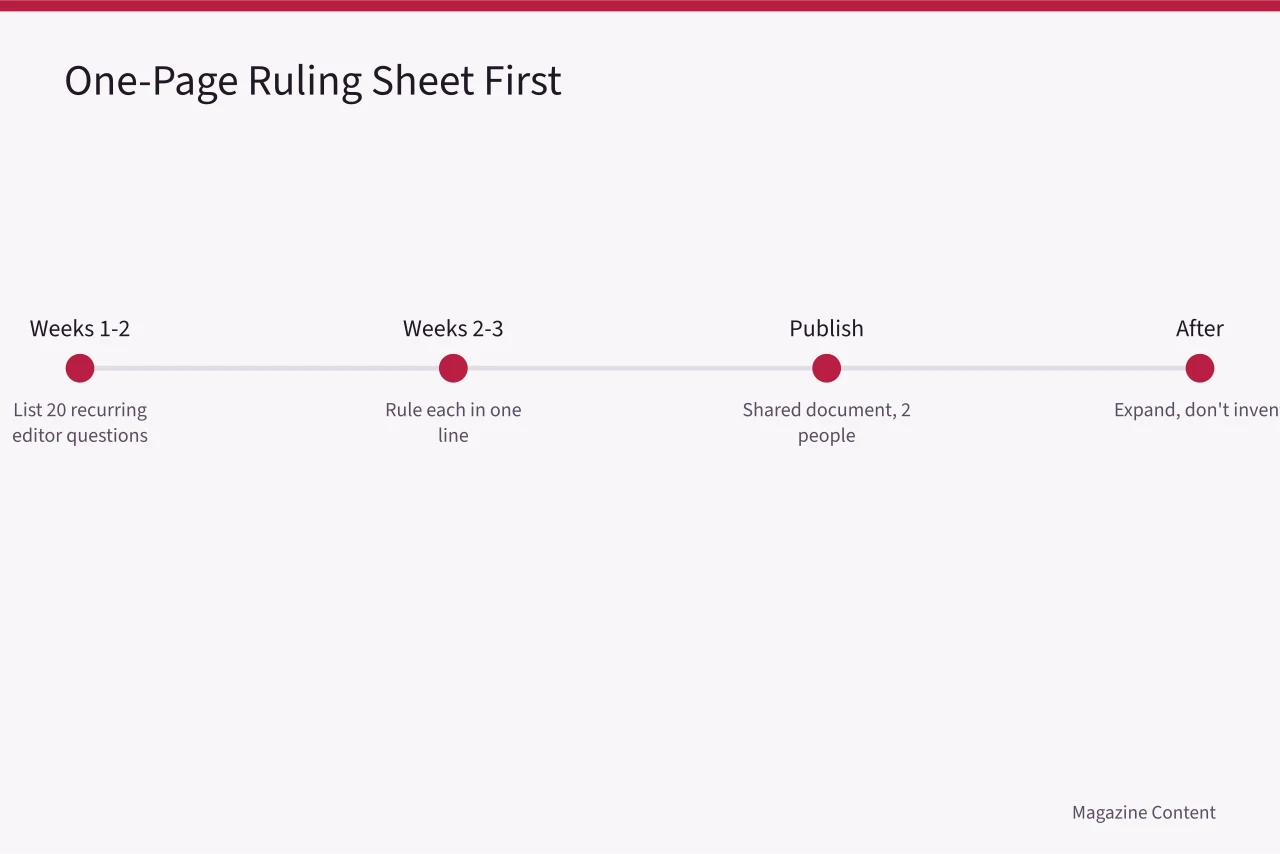
The working order is the reverse. Write down the 20 questions your editors actually ask, rule on each in one line, and publish that. It takes 2 to 3 weeks with two people and a shared document. Everything after that is expansion, not invention.
A style guide is a reference for recurring decisions, not a grammar textbook. The Wikipedia entry on style guides is a fair primer on what these documents are for and what they are not.
Choosing between AP and Chicago
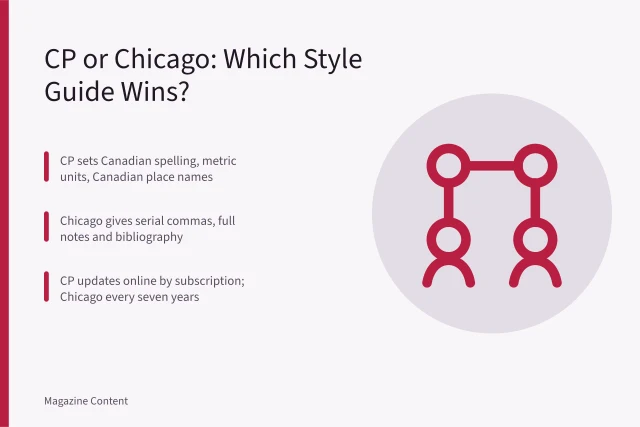
Pick one as the house base. AP is the default for newsstand magazines and anything with a wire or web feed. Chicago suits long-form features, books coverage, and titles with a scholarly read.
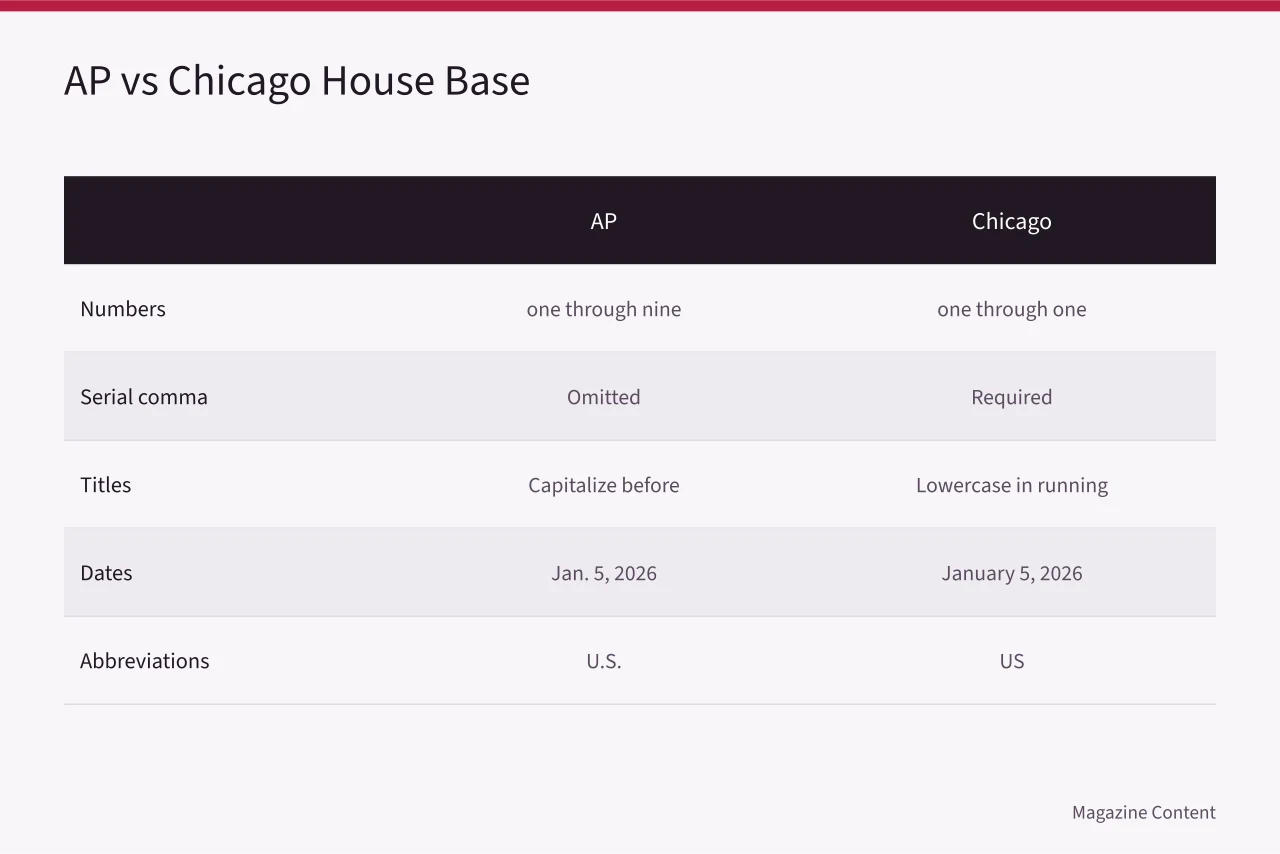
| Decision | AP | Chicago |
|---|---|---|
| Numbers | Spell out one through nine | Spell out one through one hundred |
| Serial comma | Omitted | Required |
| Titles | Capitalize formal titles before names | Lowercase most titles in running text |
| Dates | Jan. 5, 2026 | January 5, 2026 |
| Abbreviations | Periods in U.S. | US, no periods |
The AP Stylebook and the Chicago Manual of Style both publish annual editions. Buy the current one for whichever you choose, because the entries move.
Stage by stage
- Weeks 1 to 2: inventory the disputes. Collect the last 50 queries from copy editors and proofreaders. Group them into spelling, numerals, names, and punctuation.
- Weeks 2 to 3: publish the ruling sheet. One line per decision, alphabetized, with the base authority named at the top.
- Weeks 4 to 8: expand into sections. Add capitalization, titles, quotations, and legal language. This is where a US desk writes down its defamation posture, and the Cornell overview of defamation law explains the elements editors need to know.
- Weeks 8 to 12: test it on live copy. Mark up two issues against the draft and note every gap.
- Month 4 onward: formalize. Produce the full house book, version it, and set a 6 month review date.
What has to exist before what
You cannot write the numerals section before you have chosen a base authority. Every rule downstream depends on that choice, and reversing it later means rewriting half the document.
The harder blocker is ownership. A style guide without a named editor who answers queries within a day will be ignored by the third issue. Assign the role in writing, with a deputy for holidays. That single decision does more for adoption than any amount of formatting.
Do not start the layout or typography sections until the copy rules are settled. Design decisions follow editorial ones, and the practical guide to magazine design and typography shows how those two layers interact once the text conventions are fixed.
Where it stalls
The named failure mode is silent drift. Cause: two senior editors keep using their own preferences because the guide never ruled on the specific case, so junior staff copy whichever version they saw last.
The symptom appears months later. You find three spellings of the same company name across six issues, and a fact-checker cannot tell which is house style. Fix it by logging every new ruling the day it is made, in a dated changelog at the back of the guide.
What to do while waiting
While the full book is in draft, keep a decision log in the shared drive. Anyone who makes a ruling adds a line. The log becomes the raw material for the next revision, and it costs nothing to maintain.
Run a 30 minute session once a month with the copy desk. Read out the five most common queries and confirm the answers. That habit keeps the guide aligned with the work and gives new hires a reason to open it.
Common questions
How long should the finished guide be? Most independent titles settle between 12 and 30 pages. Anything longer goes unread. Keep the ruling sheet at the front and the detail behind it.
Should we follow AP or Chicago for a US magazine? AP unless your readership expects long-form conventions. Many titles use AP as the base and borrow Chicago for notes, bibliographies, and book coverage.
Who owns the guide? One named editor, with a deputy. The role includes answering queries, logging rulings, and running the 6 month review.
Can we just buy a published stylebook and stop there? No. Published books do not know your house names, your column titles, or your legal posture. The value is in the deviations you write down.