Guides
Magazine Media Kit Examples: What to Include to Sell Ad Space
Magazine media kit examples that sell ad space: what US buyers actually want, the questions to ask, and the answers that should end the conversation.
What to take away
- A media kit is a sales document, not a brand brochure. Every page should answer a buyer question or remove a reason to say no.
- US print CPMs for regional and enthusiast titles commonly run from roughly $15 to $60, labelled illustrative, while national titles with audited circulation sit far higher.
- Circulation claims need a source. Audited numbers from the Alliance for Audited Media carry more weight than a printer's estimate.
- Ask the sales rep four hard questions before you sign anything, and treat evasive answers as a stop sign.
- The insertion order has to state rates, deadlines, cancellation terms and who owns the creative.
A media kit sells a specific audience to a specific advertiser. Generic reach language does not close a buy with a regional auto dealer or a national outdoor brand. The kit has to show who reads the magazine, what they spend on, and what a page costs against comparable titles.
Scopes that are actually different jobs
Publishers confuse three separate products under one cover price. Print display space, sponsored content and newsletter or web placements are sold differently, priced differently and measured differently. A media kit that blends them into one rate sheet invites the buyer to compare your sponsored feature against a cheap banner ad.
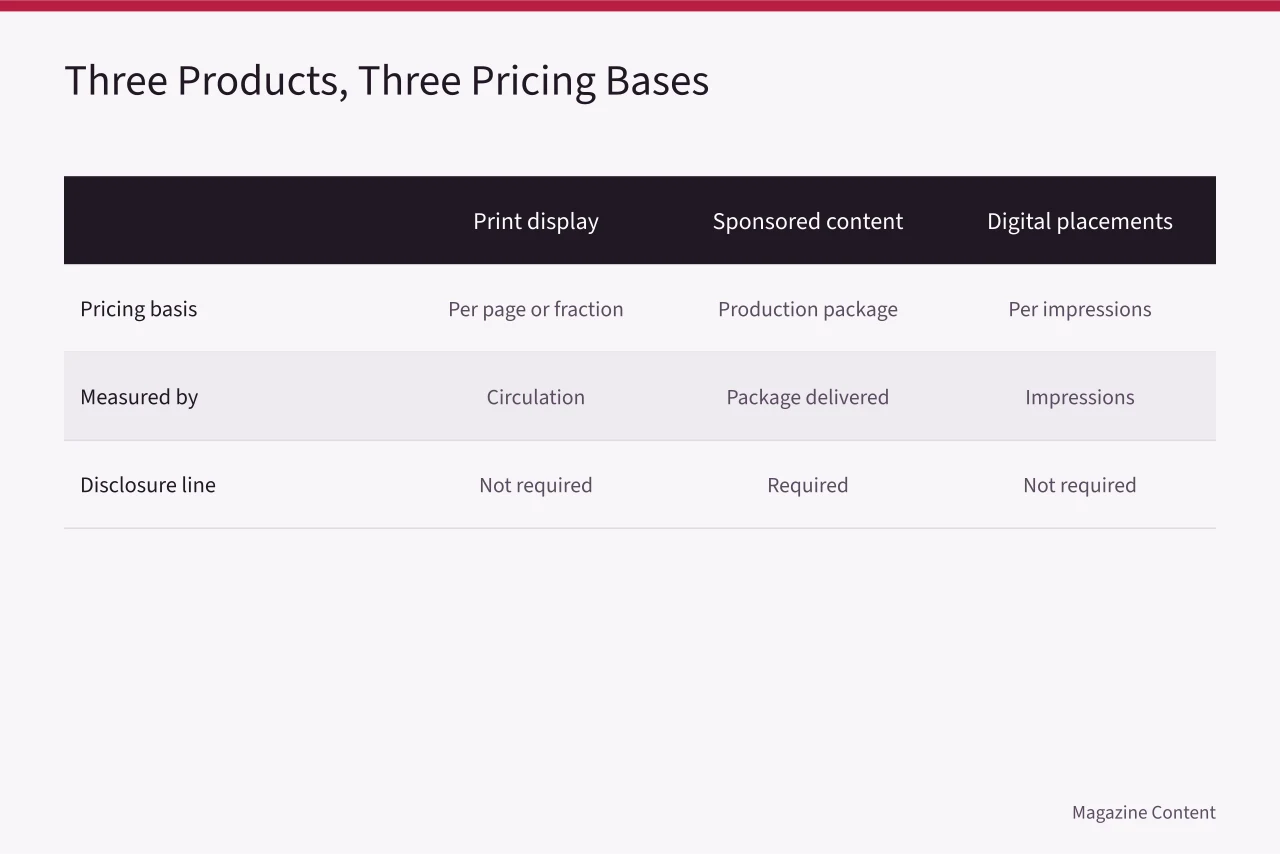
Separate the scopes in the kit. Display advertising is priced per page or fraction against circulation. Sponsored content is priced as a production package with a disclosure line. Digital placements are priced on impressions. The Media kit entry lays out the standard components, which is a fair starting checklist before you write anything.
The numbers a buyer checks first
Every US media planner runs the same arithmetic. They take your rate, divide by your circulation in thousands, and compare the result against other titles on the plan. That figure is CPM, and the Cost per mille definition is worth reading before you set a rate.
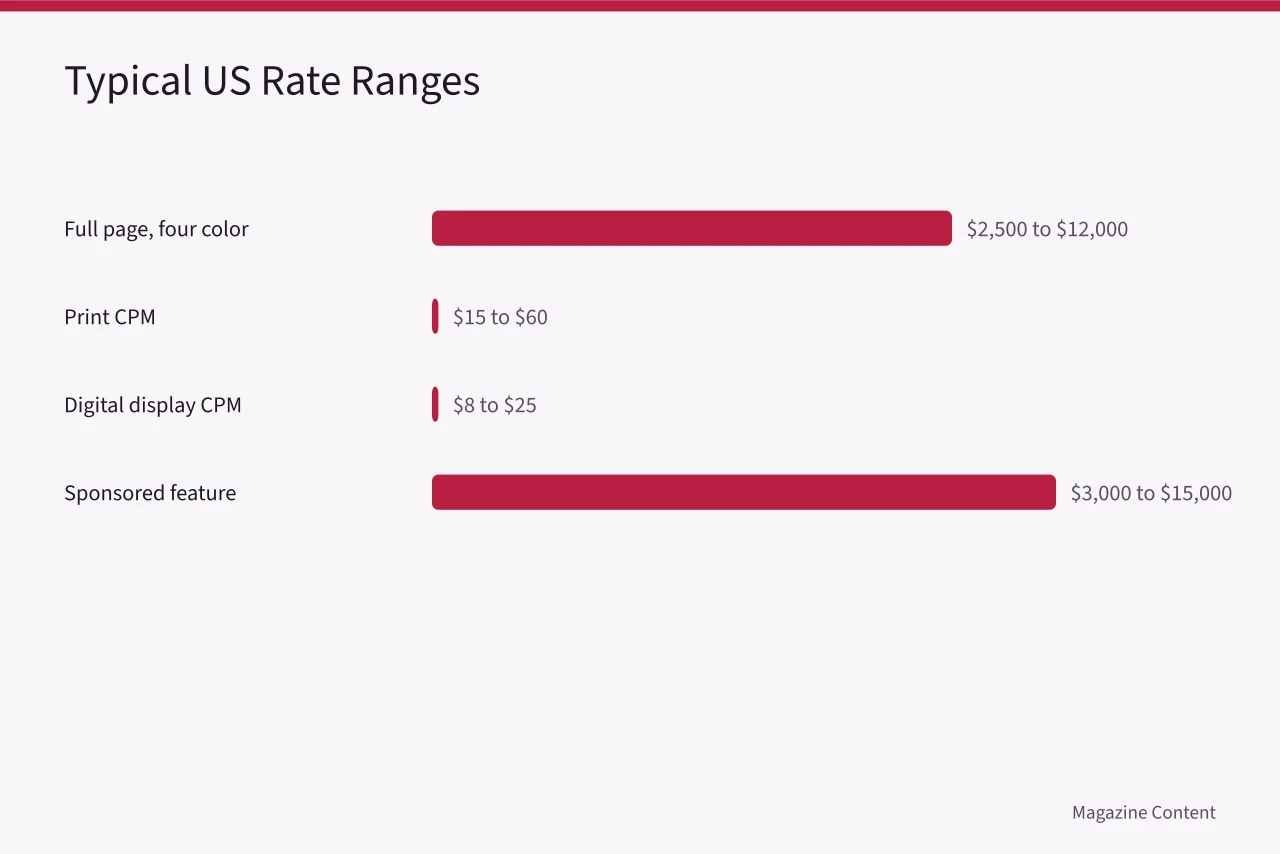
Show the numbers
| Full page, four color | $2,500–$12,000 |
|---|---|
| Print CPM | $15–$60 |
| Digital display CPM | $8–$25 |
| Sponsored feature | $3,000–$15,000 |
Those ranges are illustrative, drawn from what regional and enthusiast titles quote. National titles with audited circulation and strong demographics price well above them.
Questions to ask before you sign
Ask these of any sales house, agency or broker pitching you representation.
Which advertisers have you placed in titles like mine in the last twelve months?
What is your commission, and is it taken from my rate or added on top?
Who owns the insertion order if the advertiser pays late?
What happens to my rate card if you discount without telling me?
How do you report a shortfall against a guaranteed impression count?
Write the answers down. A rep who cannot name a comparable title is selling you a promise, not a service.
Evidence to request
Ask for a sample insertion order, a recent campaign report for a comparable title, and a client list with contactable references. Request the last two years of collection history, not a summary. If the sales house handles creative, ask to see the actual files they delivered.
Circulation evidence matters more than anything else in the kit. Audited statements, a printer's affidavit or a verified digital analytics export all work. A number with no source will not survive a media planner's first call. The Advertising media overview explains what planners weigh when they compare print against other channels.
Answers that should end the conversation
Three replies mean you walk away.
"We do not share client references, but trust us." No verifiable history means no accountability.
"Our commission is negotiable, we will work it out later." Undefined commission is a rate cut waiting to happen.
"We guarantee results, not impressions." Nobody guarantees sales from a print page, and a rep who does is selling something you cannot deliver.
A fourth, softer warning: any rep who cannot explain the difference between your print CPM and your digital CPM is not reading your kit.
What the agreement must say
An insertion order or representation agreement has to state the rate for each unit, the commission percentage and who pays it, the space close and material deadline dates, and the cancellation window. It must also say who owns the creative, who handles billing and collections, and what happens if an advertiser pulls out after the deadline.
Add a short clause on disclosure. Sponsored content in a US magazine needs a clear label, and the FTC native advertising guide sets out what counts as clear. Your kit should show the label before anyone buys.
Example: a one-page regional kit
A city business monthly with 12,000 audited circulation built a single page. It listed the reader profile, three advertiser testimonials with named companies, a rate card with four units, and one line on the audit source. The sales house closed six local advertisers in a quarter. Nothing on the page was decorative.
Common questions
How long should a media kit be?
Four to eight pages for a regional title. Buyers skim, so put circulation and rates on page one. Long kits get filed and forgotten.
Do I need audited circulation to sell advertising?
No, but it changes who will buy. Without an audit you are limited to local advertisers who know the publication. With one, you can approach regional and national brands.
Should the rate card be public?
Yes for most independent titles. A public rate card saves time and signals confidence. Keep discount tiers private so you can negotiate.
What if an advertiser asks for a guaranteed position?
Charge a premium and state it in the insertion order. Position guarantees are a real cost, because they constrain your layout and can force late changes.