Guides
Should You Sell Magazine Back Issues Online?
Sell magazine back issues online through four routes: your own store, a marketplace, a print-on-demand archive, or a wholesale lot. Each fits a different operation.
What to take away
- Four routes exist for selling back issues online: your own storefront, a third-party marketplace, print-on-demand reprints, and bulk lot liquidation. Each suits a different size of archive and staff.
- Pricing is not one number. Single issues, complete volumes, and themed bundles carry different values, and condition drives more variance than age.
- US sales tax applies to most physical back issue sales after the 2018 South Dakota v. Wayfair ruling, which let states tax remote sellers without a physical presence.
- Marketplaces hand you traffic but take a cut and own the customer relationship.
- No route solves storage, grading labor, or the fact that most back issues never sell at any price.
The four routes being compared
A publisher with 40 years of archives faces a common decision. Do you list issues one at a time on your own site, dump them on eBay, reprint only the valuable ones, or sell the lot to a dealer?
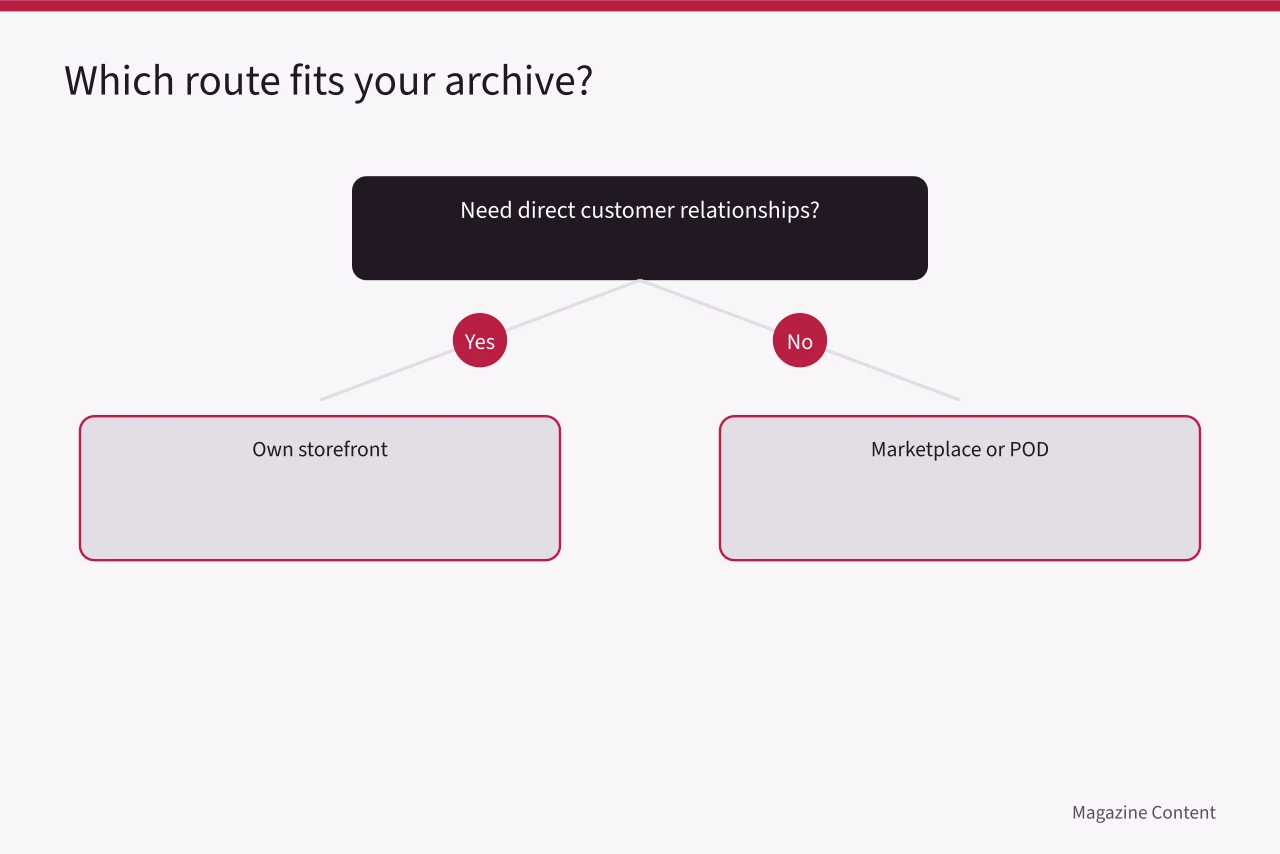
Each route answers a different question. Your own store answers "how do I build a direct relationship?" A marketplace answers "how do I reach buyers today?" Print-on-demand answers "how do I serve demand without holding stock?" Bulk liquidation answers "how do I clear space fast?"
The criteria that matter
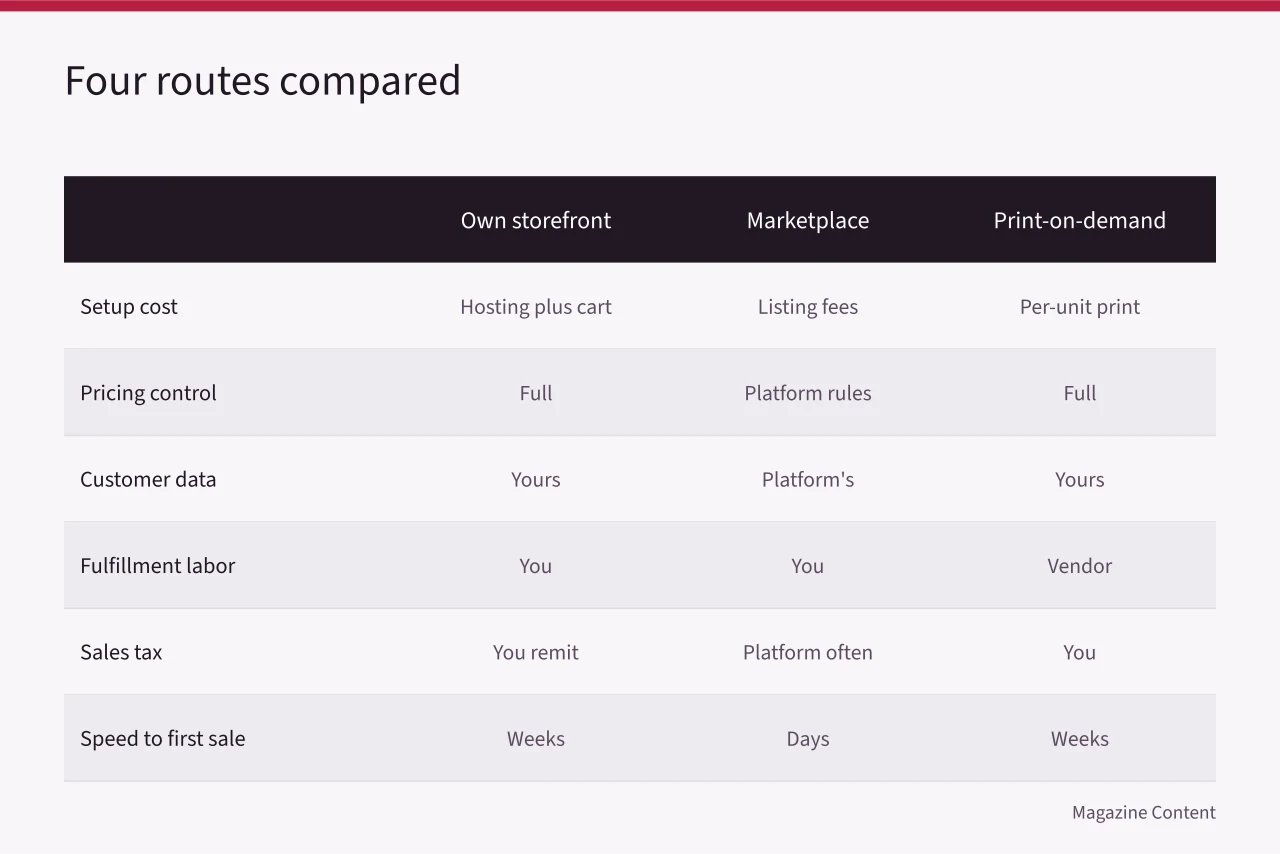
| Criterion | Own storefront | Marketplace | Print-on-demand | Bulk lot sale |
|---|---|---|---|---|
| Setup cost | Hosting plus cart fees | Listing fees only | Per-unit print cost | None |
| Control of pricing | Full | Limited by platform rules | Full | Negotiated once |
| Customer data | Yours | Platform's | Yours | None |
| Fulfillment labor | You | You | Vendor | Buyer collects |
| Sales tax handling | You register and remit | Platform often collects | You | Usually not applicable |
| Speed to first sale | Weeks | Days | Weeks | Days to weeks |
| Best archive size | Any | Any | Titles with steady demand | Large, low-value stock |
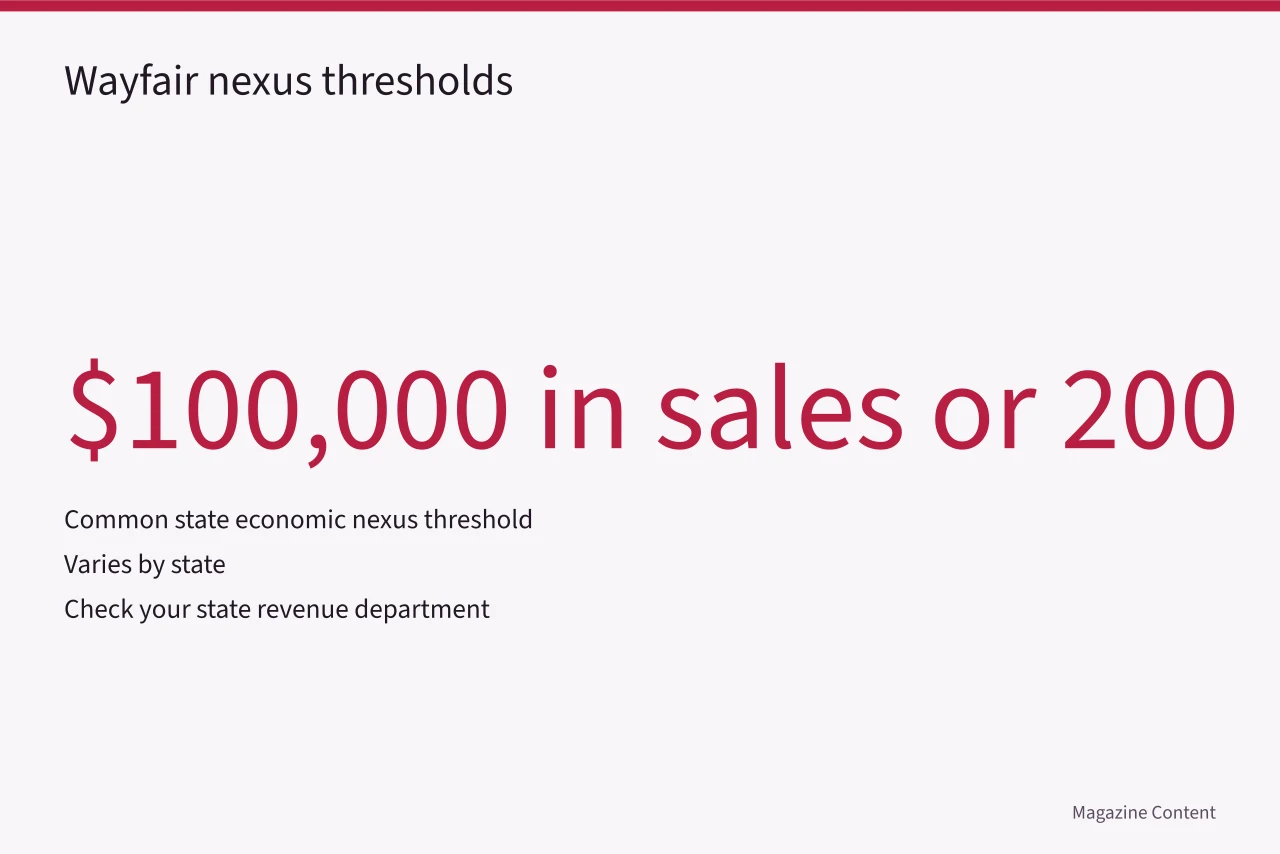
Sales tax is the criterion most publishers miss. Under the Wayfair decision, states can require remote sellers to collect tax once they cross an economic nexus threshold, commonly $100,000 in sales or 200 transactions, though the figure varies by state. Check your own state's revenue department rather than assuming a national rule.
Option by option
Your own storefront. Platforms like Shopify, WooCommerce, and Squarespace let you list issues with photos, condition notes, and bundle pricing. You keep the margin and the email list. You also handle every refund, chargeback, and packaging run. This route is right when your archive is small enough to photograph by hand and your audience already visits your site.
Third-party marketplaces. eBay, Etsy, and AbeBooks bring buyers who are already searching. Fees typically run in the low teens as a percentage of the sale, plus payment processing, though rates change and you should confirm current numbers on each platform. This route is right when you need volume and do not want to build traffic.
Print-on-demand. Services like Amazon KDP for print or Lulu let you sell reprints without holding inventory. Unit costs are high relative to offset printing, so it only works on titles with repeat demand. This route is right for a famous issue that keeps selling, not for a full archive.
Bulk lot sales. Selling to a dealer or auction house clears shelves in one transaction. You get a fraction of retail. This route is right when storage costs more than the stock is worth.
Where each one wins
A single-title publisher with loyal readers wins with an own storefront. The margin per issue is highest and the buyer data feeds future subscription offers.
A publisher with no e-commerce experience wins with a marketplace first. Listing twenty issues takes an afternoon and tests whether demand exists before you invest in a store.
A publisher with one iconic issue wins with print-on-demand. You avoid warehousing and sell indefinitely.
A publisher facing a lease expiration wins with a bulk lot sale. Speed beats price when storage is the binding constraint.
For broader context on how back issues fit a publisher's revenue mix, the Wikipedia entry on back issues explains their role in periodical publishing.
What none of them solve
Every route shares one limitation: unsold inventory. Most back issues have no secondary market at all. General-interest titles from the 1980s and 1990s commonly sell for a few dollars, and shipping often exceeds the sale price. No platform fixes that arithmetic.
Grading is the second shared cost. Buyers expect condition notes, and writing them takes minutes per issue. On a 500-issue archive that is days of labor before the first dollar arrives.
Sales tax registration is the third. Once you cross nexus thresholds in multiple states, filing obligations multiply. A marketplace that collects on your behalf removes some of this, but not all states and not all platforms.
Before committing to any route, it helps to understand how online marketplaces structure fees and seller obligations, since those terms shape your net margin more than your list price does.
Common questions
How should I price a single back issue? Start with completed sales on eBay for the same title and era, not asking prices. Then adjust for condition. A range of $5 to $25 covers most general-interest issues, with rare or first issues far higher.
Do I need to collect sales tax? In most states, yes, once you cross an economic nexus threshold. Thresholds vary, so confirm with your state revenue department. Marketplaces often collect on your behalf, but you remain responsible for registration.
What about shipping costs? USPS Media Mail is the standard for magazines, but eligibility rules apply and you should verify current rates. Build shipping into your displayed price so buyers see one number.
Is a bulk sale ever the better choice? Yes, when storage, labor, or time costs exceed expected sale revenue. A dealer paying 10 to 20 percent of retail is often better than months of unsold listings.