Rules
Selling Magazine Back Issues: A US Guide to Rights, Pricing, and Shipping
How US sellers can clear rights to resell print copies, grade and price back issues, bundle slow stock, and ship magazines without losing money.
What to take away
- You may resell print copies you own, but copying and selling their contents needs permission from the rights holder.
- Condition grading sets your price range, and completed sales beat asking prices as a guide.
- Postage and packaging decide whether a single low value issue earns anything at all.
- Bundling slow moving runs into lots often pays better than listing every copy alone.
Rights: what you may legally resell
A back issue is a physical copy sold after its cover date, and a resale market for them has existed for decades.
US law generally allows you to resell a physical copy you lawfully own. The first sale doctrine limits a copyright owner's control over later distribution of that specific copy. What you never own is the content printed inside it.
Scanning pages and selling them as files is reproduction, not resale. That step requires written permission from the publisher and often from freelance contributors who kept reprint rights. Read your contributor agreements before you advertise any digital archive.
Publisher contracts also vary. Some assign all reprint rights to the magazine, while others return them to the writer after a set period. Those terms decide what a seller may legally reproduce.
Grading and pricing back issues
Price follows condition. Collectors grade on a scale running from Near Mint down to Poor, checking spine tightness, cover gloss, page color, and any writing or moisture damage.
Back Issue Grading and Pricing
Near Mint
- Spine
- Tight
- Corners
- Sharp
- Cover
- No creases
- Marks
- None
- Pricing
- Top of sold
Fine to Very Good
- Spine
- Light wear
- Corners
- Minor edge rub
- Cover
- Minor rub
- Marks
- None
- Pricing
- Sold average
Good
- Spine
- Visible creases
- Corners
- Small tears
- Cover
- Visible creases
- Marks
- Owner marks
- Pricing
- Bundle
Fair to Poor
- Spine
- Loose pages
- Corners
- Heavy wear
- Cover
- Stains
- Marks
- Heavy wear
- Pricing
- Reading copies
| Grade | Condition notes | Pricing approach |
|---|---|---|
| Near Mint | Tight spine, sharp corners, no creases | Price near the top of completed sales |
| Fine to Very Good | Light spine wear, minor edge rub | Price at the recent sold average |
| Good | Visible creases, small tears, owner marks | Bundle with similar issues |
| Fair to Poor | Loose pages, heavy wear, stains | Sell as reading copies or lot filler |
Demand matters as much as condition. First issues, final issues, and issues tied to a film, television show, or notable cover artist sell above the average for a run.
Asking prices show what sellers hope to get. Completed sales show what buyers actually paid.
Search completed listings for the same title, issue number, and grade. If only a handful sold in the past year, treat the issue as lot filler instead of a standalone listing.
Shipping back issues without losing margin
Most back issue sales fail on postage, not on price. A single digest size magazine can cost more to mail than it sells for.
Packing and Shipping a Back Issue
- Weigh and measure the packed mailer
- Sandwich issue between two rigid boards
- Pick a mail class and check current rates
- Add tracking and insurance above threshold
- Charge shipping separately or fold in
Media Mail is cheaper than most alternatives, but its eligibility rules are narrow and not every magazine qualifies. Confirm the rules before you quote a rate you cannot honor.
For heavier lots, compare a flat rate box against weight based pricing for your zone. Pack tightly, because shifting weight damages corners in transit.
Bundles, lots, and where to list
Single issues with modest value rarely justify individual listings. Group them by title, decade, or theme, and describe the bundle honestly, including missing issues.
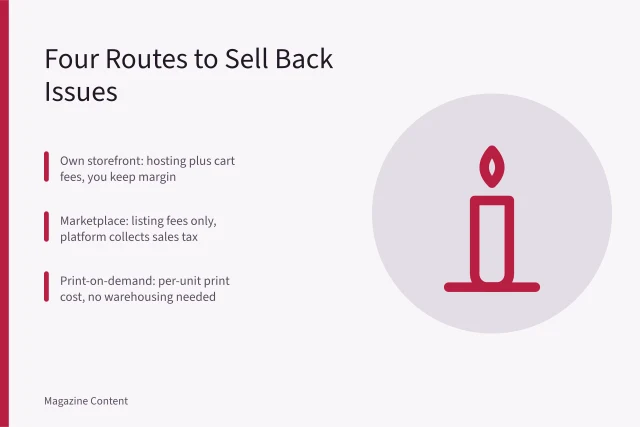
An online marketplace brings buyer traffic and takes fees in return. eBay, Etsy, AbeBooks, and Amazon each attract a different kind of buyer, so compare fee structures before you commit.
Your own store keeps more of every sale but brings you no traffic. A wholesale lot moves inventory quickly at a low unit price. A print on demand archive serves readers who want specific pages rather than a physical copy.
For a fuller comparison of the four routes, read our guide on whether to sell magazine back issues online.
Example: grading a forty issue run
Grading a Forty Issue Run
- 40total issues inherited
- 10Near Mint, list individually
- 20Fine, bundle by year
- 10Good, lot filler
List the Near Mint copies individually with clear photos of the spine, corners, and cover. Bundle the Fine run by year. Use the Good copies as lot filler or reading copies.
Check completed sales for each group before you set a number. If the whole run moves slowly, one auction lot may clear the shelf faster than forty separate listings.
Records, fees, and sales tax
Keep a simple log of what you paid, what you sold, and what the platform charged. Marketplace fees, payment processing, and shipping supplies all cut into the margin.
Many US states now require marketplaces to collect and remit sales tax on your behalf. Rules differ by state and by platform, so check the current policy where you live before you assume anything.